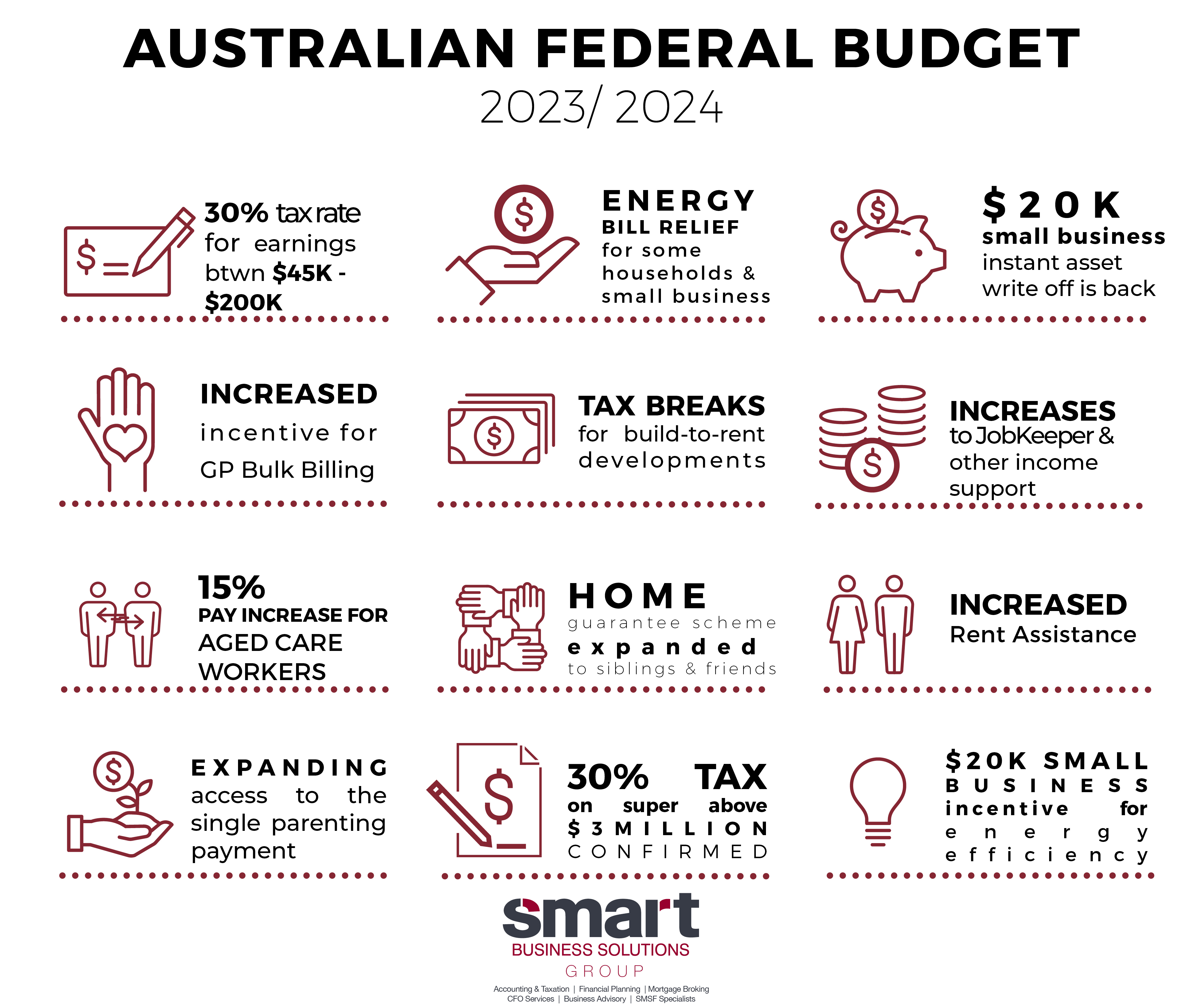
The 2023-24 Federal Budget offers a $4.2bn surplus; the first in 15 years. The surplus was driven by a surge in the corporate and individual tax take. High commodity prices, inflation, and high employment have all pushed up corporate and individual tax receipts. But the gains can't be relied on long term. The Budget is expected to deliver a deficit of $13.9 billion in 2023-24, and a $35.1bn deficit in 2024-25.
While remaining persistently high for longer than anticipated, inflation is expected to fall from 6% to 3.25% in 2023-24.
The $3bn energy relief partnership with the states and territories and the temporary price cap on gas and black coal, are estimated to lower inflation by 0.75% in 2023-24.
Gross debt to GDP is expected to peak lower and earlier at 36.5% of GDP in 2025-26. While $154bn less than the March 2022 expectations, it is an eye watering $1.015 trillion. Net debt rises steadily to 24.1% of GDP to $702.9bn in 2026-27. And, this is assuming the Government can deliver on its anticipated savings reigning in the National Disability Insurance Scheme from a growth rate of 14% to 8%.
Growth is expected to slow. Real GDP growth is expected to slow to 1.5% in 2023-24, before rising to 2.25% in 2024-25.
Falling behind on your BAS lodgements looks like an administrative problem. Left long enough, it becomes an expensive one, because the GST you collected stays payable indefinitely while the GST credits you are owed disappear after four years. Here is what that looks like in dollars.
With negative gearing now quarantined for established dwellings, new house and land has become the sensible play for investors — but there is a trap in the first eighteen months. Interest on the land is denied, while interest on the construction is not. If the bank has written one loan, someone has to do the sums. Here is why it pays to split the loan before you sign.
When the draft legislation for the trust minimum tax was released, it came with a reassurance: if you do not want to restructure, you can simply make an election instead — no restructure, and no state stamp duty. That is accurate, but it is also a very small part of the decision. Here is why you should choose your structure for the eventual sale of your business, not for the announcement.